

The new fuel assemblies are due to be loaded into unit 1 during its planned shutdown later this year.
The country's nuclear power plant operator 膶贰窜 began work to diversify its nuclear fuel suppliers in 2018, signing a contract for the supply of fuel assemblies for the Temelín plant with Westinghouse, and France's Framatome, in 2022. The fuel for Temelín was delivered last year.
The process of getting the fuel approved is a long one - there has been a five-year series of analyses and tests as part of ensuring the new fuel meets the strictest safety requirements. That included experts spending two years evaluating the fuel's behaviour during normal operation from a safety perspective, its compatibility with the reactor and the method of handling and storage, 膶贰窜 said.
Daniel Beneš, Chairman and CEO of 膶贰窜 Group, said: "This is another important step in strengthening the energy security of the Czech Republic and diversifying nuclear fuel suppliers. In addition, we also hold strategic reserves of nuclear fuel in both of our nuclear power plants."
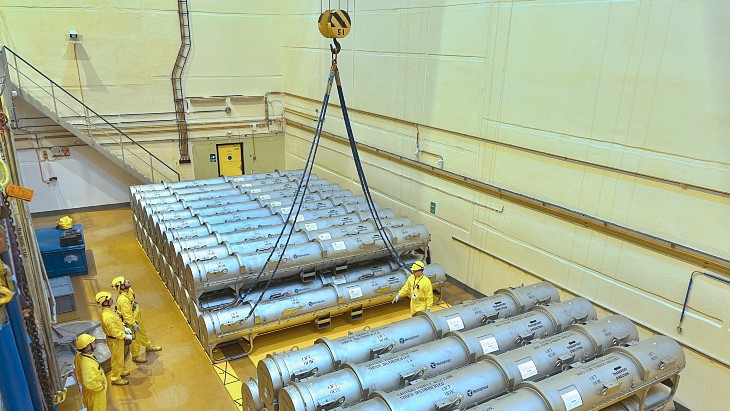
The fuel assemblies were delivered during 2025 (Image: 膶贰窜)
膶贰窜 signed a contract in 2022 for the supply of fuel assemblies for the Temelín nuclear power plant with Westinghouse - for the Robust Westinghouse Fuel Assembly design (RWFA-T) from Westinghouse Electric Sweden AB鈥� - and with Framatome, and the following year signed a contract with Westinghouse for Dukovany. In June 2025 its first VVER-440 fuel reload of its NOVA E-6 design was delivered to Dukovany. 膶贰窜 said it was preparing licensing for the Dukovany fuel assemblies.
The Czech Republic currently gets about one-third of its electricity from the two VVER-1000 units in operation at Temelín, which came into operation in 2000 and 2002, and four VVER-440 units at Dukovany, which began operating between 1985 and 1987.
The diversification of nuclear fuel suppliers - and increases in fuel reserves - is seen as increasing energy security among European Union countries previously using Russia's TVEL for fuel for their VVER reactors which were designed in the Soviet Union era.


_1_12560.jpg)


_68138.jpg)
_84289_33276.jpg)

_85344.jpg)
